Sold to the Highland Brute- Extended Epilogue
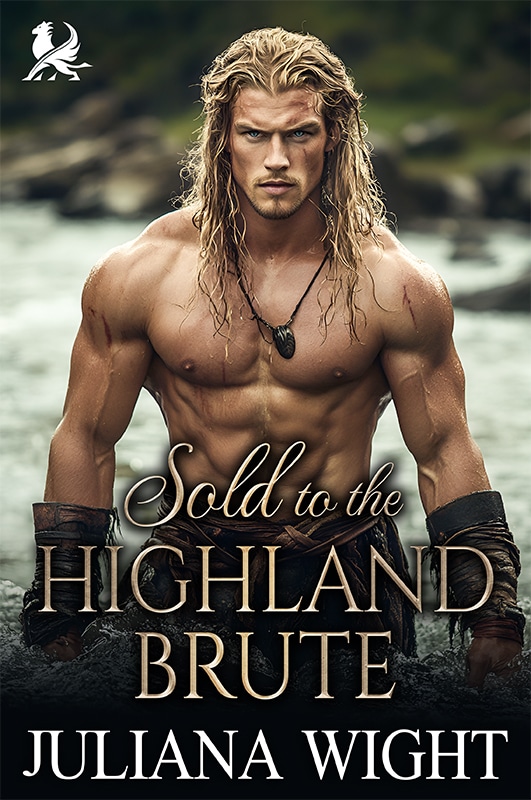
One year later, Castle MacKenzie, Scottish Highlands
“Ye’ve given me a second chin.”
Hamish glanced up from the parchment spread across his knee. Isobel stood at the solar window with one hand pressed against the small of her back, afternoon light catching the loose dark waves that tumbled past her shoulders.
Her other hand rested on the high curve of her belly—round and full and unmistakable beneath the soft blue wool of her gown.
“That’s meant tae be the shadow beneath yer jaw.”
“Hamish.” She crossed to him slowly, the way she moved these days—careful, deliberate, one hand always bracing the weight of the child that would arrive within weeks. She plucked the parchment from his hands and studied it with the same critical eye she’d used the very first time she’d corrected his grip on charcoal. “That shadow has its own shadow. And why daes me nose look like it belongs tae Lewis?”
He bit the inside of his cheek to keep from laughing. “Lewis has a fine nose.”
“Lewis has a crooked nose because ye broke it when ye were fourteen.”
“Twelve.”
She handed the parchment back, her fingers brushing his. “Ye’ve been at this fer a year, husband. I’m startin’ tae think yer stubbornness is greater than yer talent.”
“Aye, well.” He set the charcoal down and wiped his blackened fingers on a cloth. “Ye married the stubbornness. Nay talent was part of the arrangement.”
Isobel laughed—that full, unguarded sound that still caught him off guard sometimes. A year into their marriage, it had become the most common sound in his home and his life, and some part of him still couldn’t believe he was lucky enough to hear it every day.
He watched her lower herself into the chair across from him, one hand gripping the armrest while the other cradled her belly. She’d gained weight in all the right places.
Health looks good on her. Happiness looks better.
“Dinnae stare at me like that,” she said, settling back with a sigh that was half comfort, half weariness.
“Like what?”
“Like ye’re tryin’ tae memorize me.”
“I am.”
Her expression softened. She reached across the gap between their chairs and took the parchment from where it rested on his knee. Studied the clumsy lines again—the lopsided eyes, the chin, the vague suggestion of dark hair that looked more like storm clouds than anything attached to a human head.
“Ye ken,” she said quietly, tracing one of the charcoal lines with her fingertip, “the very first time I sat ye down with paper and told ye tae draw, ye looked at me like I’d asked ye tae compose a sonnet in French.”
“I remember.”
“And ye were terrible at it.”
“I remember that too.”
“Ye’re still terrible.” She looked up, and her eyes were bright. “But ye never stopped tryin’. Nae once.”
He held her gaze. “Ye asked me tae.”
“I asked ye tae try. I didnae ask ye tae spend a full year producin’ portraits that make me look like yer braither.”
A laugh escaped him—low and genuine, rumbling through his chest. She grinned at the sound of it, pleased with herself.
This is what we fought fer. This ordinary, unremarkable afternoon wi’ the woman I love.
The solar was warm around them. It smelled of charcoal dust and beeswax candles and the dried heather she kept in a clay pot on the windowsill. Their books sat stacked on the low table—his ledgers alongside sketchbooks she’d filled over the past year.
“The coalition’s holdin’ strong,” he continued. “Alpin wrote that Mhairi’s been workin’ wi’ the clans in the east—findin’ the lasses who were sold there. Gettin’ home who she can.”
Isobel nodded slowly. “She told me in her last letter that one of the women she found—a Cameron lass, barely sixteen when she was taken, is learnin’ tae read now. First time anyone thought tae teach her.”
Something moved behind her eyes. Not grief. Something fiercer and more fragile—the particular ache of someone who understood exactly what the other women had faced, because she’d endured it herself and come out the other side.
“Come here,” Hamish said.
She raised an eyebrow. “I just sat down.”
“Then may I come tae ye?”
Her mouth twitched. “Ye dinnae have tae keep askin’, ye ken,” she said, the same thing she always said.
“Aye,” he replied, the same thing he always replied. “And I’ll keep askin’ regardless.”
He moved to her chair and knelt beside it, ignoring the protest from his knees. This close, he could see the faint scatter of freckles across her nose, could see the tiny scar above her left wrist where a guard’s rope had bitten too deep that terrible night, could see the steady pulse at her throat, calm and even.
Alive. Safe. Mine.
He placed his hand on the armrest beside hers, palm up. An offering. She took it without hesitation, lacing their fingers together with the ease of a gesture repeated a thousand times.
“The bairn’s been restless today,” she said, guiding his hand to her belly with her free one, pressing his palm flat against the taut fabric of her gown. “I think he kens his faither’s been ignorin’ him.”
“He?”
“Or she. Either way, they’ve opinions about yer sketchin’.”
He waited. And then, he felt it—a kick, firm and unmistakable, flat against his calloused palm. Something rolled beneath her skin, a heel or a fist, and Hamish’s breath caught the way it had every single time since he’d felt the first kick three months prior.
“There.” Isobel’s voice had gone soft. “Did ye feel it?”
He couldn’t speak for a moment. Just kept his hand where it was, fingers spread wide, feeling the impossible miracle of life moving beneath his wife’s skin. His child. Their child—conceived in love, carried in safety, to be born into a world they’d both bled to make better.
His vision blurred. He blinked hard, once.
“Aye,” he managed. “I felt it.”
Isobel’s hand came up to cup the back of his neck, her fingers threading through the dark hair at his nape. She pulled him closer until his forehead rested against her belly, and he could feel the baby shift again—restless, impatient, already making demands.
Like yer maither, he thought, and the corner of his mouth curved.
“Hamish?”
“Aye?”
“I want ye tae finish the sketch.”
He lifted his head. “Ye’ve just spent ten minutes tellin’ me how terrible it is.”
“It is terrible.” Her thumb traced the edge of his jaw—following the faint scar there. “But ye drew it. Fer me. And that makes it worth keepin’.”
He looked at her for a long moment. The firelight played across her face, catching the gray of her eyes, turning them silver. Her dark hair spilled across the green tartan draped over the back of the chair. She looked nothing like the starving, terrified woman he’d first seen on that auction platform—hollow-eyed, shaking, stripped of everything but the bare will to survive.
“Then ye’ll have it,” he said simply.
Because she’d asked. And he would always at least try to give her anything she asked for.
He returned to his chair, picked up the charcoal, and bent over the parchment again. Isobel watched him from across the warm space between them—the solar quiet around them except for the crackle of the fire and the scratch of charcoal on paper and, somewhere beyond the stone walls, the distant sound of the clan going about its evening.
“Hamish?”
“Aye, Isa?”
She smiled. “We’re goin’ tae be all right. Arenae we?”
He looked up from the sketch. Met her eyes across the firelit room—this woman who had taught him that tenderness was not weakness, that asking was not cowardice, that the strongest thing a man could do was open his hands and let someone choose to stay.
“Aye, mo chridhe.” The charcoal moved across the parchment, clumsy and honestly him. “We already are.”
If you haven't already, feel free to leave an honest review here!


I absolutely loved this book, the characters and the storyline. This was such a beautiful love story.
Your support means the world to me Sandra, thank you! 🩷
Loved loved this story!!
So happy to hear that Betty! Thank you so much!
It makes you Laugh Cry Cheer and Pray all on the same page. And Please write a storie about Lewis that man’s welcome at my door any day.
Thank you so much for your feedback & support my dearest! 🩷
Please edit better. Great story. Thanks
Thank you so much for your honest feedback & support dearest! 💜
This is such a fiercely tender story. I love the way he always cared for her, never pushed her, always gave her the choice. She was always stronger than she thought, strong enough to endure, survive, and then thrive. Love this book…love this series.
Thank you so much for your thoughtful feedback & support my dearest! 🙏💜